Dresden Research Insights · Generative AI and the New Disinformation Lifecycle · 22 September 2026
Many disinformation interventions assume that people encounter information in the majority language of the country where they live. The DeMuKo project challenges that assumption.
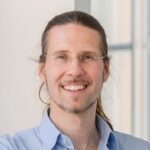
In Dresden, Tamara Heck described an interdisciplinary programme examining disinformation in multilingual contexts, particularly among people in the orientation phase after arriving in Germany. Their information needs may be especially high while language barriers and unfamiliar institutions make verification difficult.
The researchers identify three related blind spots: limited evidence about how newcomers encounter and interpret misleading information; insufficient attention to narratives that target residents in languages other than German; and media-literacy programmes that do not adequately reflect multilingual experience.
The project connects the sender side—narratives, channels and manipulation strategies—with the receiver side, including interviews and surveys. Its practical ambition is to develop low-threshold learning activities that can be tested and refined in adult-education settings, with lecturers acting as multipliers.
An important implication is that translation alone is not a sufficient intervention. Credibility depends on social context, institutional knowledge, trusted relationships and accessible verification practices.
The presentation also illustrates why interdisciplinarity matters: information science, linguistics, education and community practice each contribute different evidence.
Research question: How can media-literacy programmes become genuinely multilingual and context-sensitive rather than simply translating the same materials?
Watch the talk: YouTube recording. Explore the complete workshop archive and Dresden programme.
This editorial research insight summarizes a workshop presentation. It is not a verbatim transcript or a peer-reviewed assessment of the presented claims.
Leave a Reply