-

·
Help Shape the Research Agenda: Expert Survey on AI-Enabled Disinformation
🔎 Which AI-enabled disinformation threats matter most — and which countermeasures deserve priority? We’re inviting researchers and practitioners in AI, cybersecurity, journalism, governance, education and information integrity to contribute to an expert survey (~15 minutes). Your critical perspective can help identify gaps and shape future interdisciplinary research. ❓ What is the single most urgent unanswered research question…
-
·
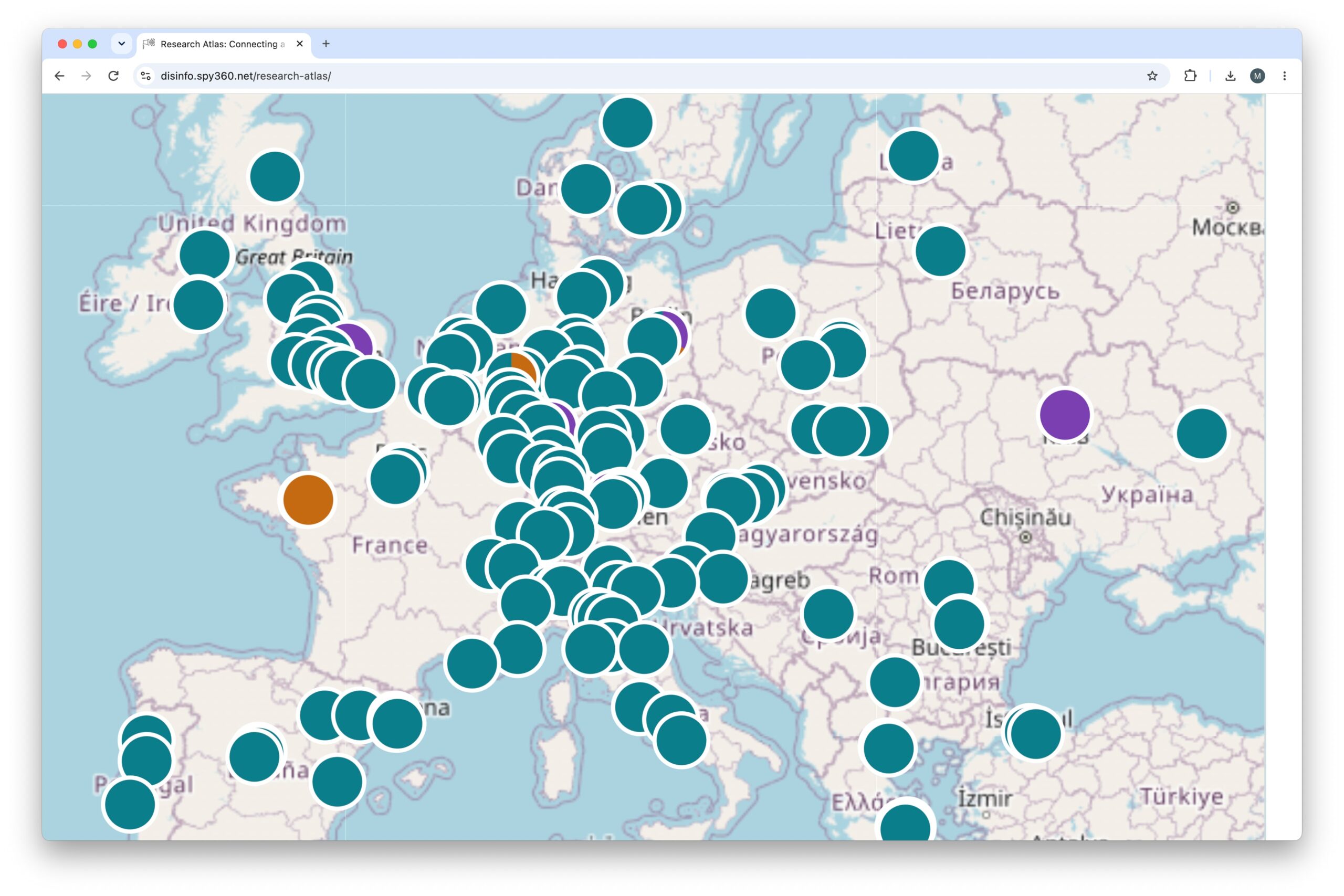
Introducing the Disinformation Research Atlas: Connect Your Research to a Global Community
🌍 Who is researching disinformation around the world — and how can we connect their work? We’ve launched the Disinformation Research Atlas: a searchable map and directory bringing together individual researchers and research projects across institutions, countries and disciplines. Add yourself or your project, discover complementary expertise and help build an international research community. ❓ Which…
-
·
What Ancient Rhetoric Can Teach Explainable AI About Manipulation
Can Plato help us detect manipulation in today’s social media? DeMasKI combines classical rhetoric, neural language processing and interpretable rules to investigate manipulative argumentation beyond simple fact-checking. Explore the Dresden research insight and recording: https://disinfo.science/dresden-2026-recordings/ Should AI moderation identify falsehoods, manipulative rhetoric, or both? #ExplainableAI #Disinformation #Research
-
·
The Dresden Proceedings Synthesis: A Concise Guide to the Workshop Findings
📄 What did Dresden reveal about AI-enabled disinformation? Our condensed scientific article, prepared for the Lecture Notes in Informatics proceedings, explains three essential shifts: from content to operations, from one chain to interacting information and audience-data flows, and from online/offline separation to social feedback. Read the concise synthesis and explore the full Zenodo report through Disinformation…
-
·
Beyond Debunking: Participatory Fact-Checking in the Age of AI | Caroline Lindekamp
How can fact-checking build resilience to AI-driven disinformation? Caroline Lindekamp explains CORRECTIV.Faktenforum, citizen participation, reusable evidence, multilingual verification and the importance of critical thinking.
-
·
Can We Prove Where News Comes From Without Proving It Is True?
CleanFeed shows why provenance is not the same as truth. C2PA, content identifiers and editorial transparency answer different questions. Explore how technical authentication can support—without replacing—critical journalism. https://disinfo.science/dresden-2026-recordings/ Should a verified source make you trust a claim, or only tell you whom to hold accountable? #Disinformation #MediaProvenance #Research
-
·
Eight Findings, Thirteen Challenges: The Full Dresden Report Is Published
📖 Disinformation is not just about fake content. It’s about operations, audience data and social feedback. Our new 40-page, open-access Dresden report develops a socio-technical model, synthesises 8 cross-cutting findings and identifies 13 emerging research challenges. Now citable on Zenodo: Explore the evidence, challenge the conclusions and help build the research agenda. ❓ Which research challenge should…
-

·
Can You Spot Fake News? Try JudgeGPT — and Discover Why AI-Generated Does Not Mean False
🧠 Can you tell whether a news story is human-written or AI-generated? And can you tell whether it’s true? These are TWO different questions. JudgeGPT lets you test both — and contribute to research on human judgement of synthetic news. Try the interactive challenge and compare your intuitions with the evidence. ❓ Which is harder for you:…
-

·
A New Home for Disinformation Research: Welcome to disinfo.science
🌍 Disinformation crosses borders, disciplines and institutions. Our research collaborations should do the same. Following the interdisciplinary Dresden workshop, disinfo.science is growing into an open resource connecting research projects, researchers and scientific expertise worldwide. Explore the Research Atlas, scientific findings and shared research agenda—and help make complementary expertise easier to discover. ❓ Why is it still so difficult…
-

·
Watch: What Dresden Revealed About AI Disinformation
🎬 AI makes convincing content easier to produce. But what makes disinformation actually work? Our short Dresden outcomes film examines influence operations, audience data, social context and the need for coordinated scientific and institutional responses. Watch the film and discover the research behind the findings. ❓ Which stage of the disinformation lifecycle deserves substantially more scientific attention? #Disinformation #GenerativeAI…